-
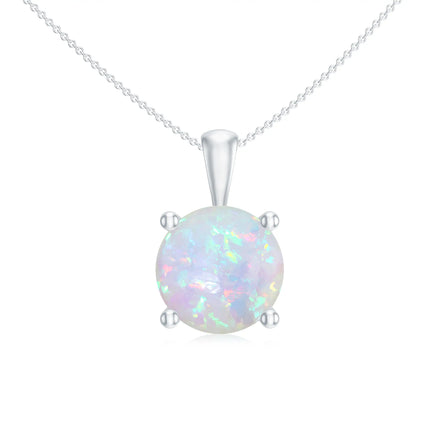
Classic Prong-Set Round Opal Solitaire Pendant Necklace - 925 Sterling Silver
Elegant, timeless, and effortlessly sophisticated, the classic round solitaire pendant necklace is designed to add a touch of refined beauty to your everyday style. Featuring a brilliant round-cut opal gemstone, this pendant showcases the natural depth that makes one of the most admired gemstones...- From $69.00
$80.00- From $69.00
- Unit price
- per
Save $11.00-
925 Sterling Silver
-
18K Yellow Gold Vermeil
-
18K Rose Gold Vermeil
-
18K White Gold Vermeil
-
Opal Teardrop V-Bale Pendant Necklace with Moissanite Diamond - 925 Sterling Silver
Grace your neckline with the timeless beauty of this Ethiopian Opal Teardrop V-Bale Pendant Necklace. Featuring a richly faceted pear-shaped natural amethyst gemstone secured in a delicate prong setting, the design is elevated by a sparkling moissanite diamond that adds refined brilliance. Crafted in...- From $75.00
$90.00- From $75.00
- Unit price
- per
Save $15.00-
925 Sterling Silver
-
18K Yellow Gold Vermeil
-
18K Rose Gold Vermeil
-
18K White Gold Vermeil


Once in a generation, the gem world gets a genuine newcomer. In 2008, miners in the Wollo Province of northern Ethiopia uncovered opal deposits so vivid that they redrew the map of the opal trade almost overnight. These Welo opals, as they came to be known, combine a bright crystal body with an explosive play-of-color that rivals stones many times their price. The Ethiopian opal necklaces at Topsy Jewels put that fireworks display on a chain: genuine, natural opals in handcrafted pendant settings of 925 sterling silver and 18K yellow, rose, and white gold vermeil, at accessible fine jewelry prices.
No two are alike, and that is the entire point. An Ethiopian opal necklace is a one-of-one, a pattern of flashing color that exists nowhere else on earth and belongs only to the woman wearing it.
The New Star of the Opal World
For more than a century, fine opal meant Australia. Ethiopia's Welo discovery changed the conversation. These volcanic-hosted opals are frequently more transparent than their Australian cousins, with a warm crystal-to-honey body that lets light plunge deep into the stone before erupting back out in color. Collectors were quick to notice that Ethiopian material often shows large, bold flashes and striking patterns, honeycomb, ribbon, and pinfire among them, at prices that welcome first-time opal buyers. The result is one of the best value stories in modern gemology: a young, exciting source producing stones with genuinely old-soul beauty. For shoppers, the practical upshot is simple: this is the moment to own an opal that earlier generations of jewelry lovers could never have found at any counter, at any price.
Play-of-Color: A Personal Light Show
Opal's magic comes from microscopic spheres of silica stacked in orderly rows. As light passes between them it diffracts, splitting into pure spectral color that shifts and rolls as the stone moves. Gemologists call it play-of-color; everyone else calls it mesmerizing. Green and blue flashes are the most common, orange and yellow add warmth, and rare red flashes are the connoisseur's prize. On a pendant, the effect is at its absolute best, because a necklace moves constantly with its wearer, catching window light, candlelight, and sunshine in an ever-changing performance that no photograph or video ever quite does justice. Watch a wearer of one of these pendants for an evening and you will see the ritual: friends asking to see it move, the small instinctive tilt of the stone toward the nearest lamp.
October's Birthstone, Reimagined
Opal is the beloved birthstone of October, shared with pink tourmaline, and is traditionally connected to Libra (September 23 to October 22) and early Scorpio. It is also the gemstone of the 14th wedding anniversary. Folklore has long tied opal to creativity, imagination, and hope, fitting for a stone that literally contains every color. For an October-born woman, an Ethiopian opal pendant is the birthstone gift elevated: not the pale, familiar version she has seen since childhood, but a luminous crystal opal alive with color. Prefer opal's fiery orange cousin? Our fire opal necklaces celebrate that side of the family in full sunset glory.
Choosing an Ethiopian Opal Pendant
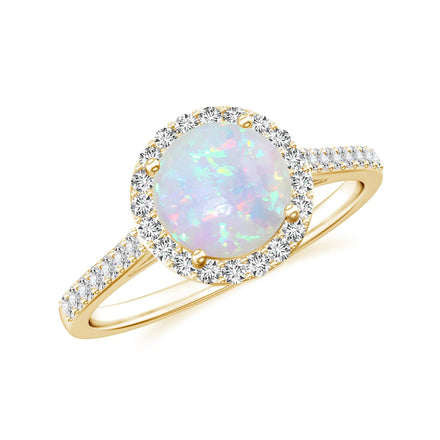
Since every opal is unique, choosing is less about specifications and more about chemistry, but a few pointers help. Look at the dominant flash colors and imagine them against her wardrobe: blue-green opals feel cool and oceanic, while stones with orange and red fire lean warm and bohemian. Consider the body tone, from near-water-clear crystal to soft honey. Lighting matters when you evaluate: warm-lit rooms tend to wake the reds and oranges, while daylight favors greens and blues, so a stone chosen at noon will surprise you again at dinner. Then let the setting frame the show: yellow or rose gold vermeil deepens the warm flashes, while sterling silver and white gold vermeil keep everything airy and iridescent. Several handcrafted Topsy Jewels designs surround the opal with a moissanite diamond halo, adding steady white sparkle around the shifting color. To complete the look, our Ethiopian opal rings and Ethiopian opal earrings carry the same living color to hands and ears. Above all, trust your first reaction; opal buyers almost universally report that the stone they kept thinking about is the one they should have bought.
Living with a Hydrophane Opal
Most Ethiopian opals are hydrophane, meaning the stone can absorb water. A soaked opal may turn temporarily translucent and mute its fire until it dries out again over days, unharmed but dull in the meantime. Add opal's gentle 5.5 to 6.5 Mohs hardness, and a few easy habits become worthwhile:
- Remove your necklace before showering, swimming, or washing dishes.
- Keep it away from perfume, hairspray, and household chemicals.
- Clean with a barely damp soft cloth rather than a soak, and never use ultrasonic cleaners.
- Store it in its own pouch at normal room humidity, away from harder gems.
A pendant is naturally protected compared with a ring, which is exactly why many jewelers consider a necklace the smartest first opal, and the habits above take less effort than caring for a favorite handbag.
Why Topsy Jewels for Your Opal
Topsy Jewels pairs real, natural gemstones with handcrafted design and accessible-luxury pricing, so a stone as extraordinary as Ethiopian opal can be an everyday joy instead of a someday dream. Each pendant is finished in quality 925 sterling silver or rich 18K vermeil and arrives ready for gifting, an October birthday, a 14th anniversary, a Christmas surprise, or a just-because moment. And because every stone is one of a kind, the gift carries an unrepeatable quality that even far more expensive jewelry cannot promise: nobody else will ever own hers. Explore the complete opal jewelry collection to see every design, or browse our full range of necklaces and pendants to compare the rainbow, though in fairness, this is the one stone that brings the whole rainbow with it.
Frequently Asked Questions
- Choosing a selection results in a full page refresh.