-
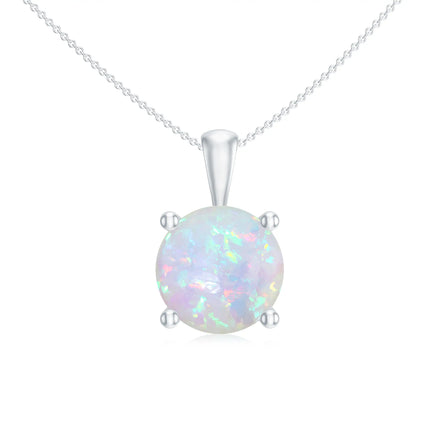
Classic Prong-Set Round Opal Solitaire Pendant Necklace - 925 Sterling Silver
Elegant, timeless, and effortlessly sophisticated, the classic round solitaire pendant necklace is designed to add a touch of refined beauty to your everyday style. Featuring a brilliant round-cut opal gemstone, this pendant showcases the natural depth that makes one of the most admired gemstones...- From $69.00
$80.00- From $69.00
- Unit price
- per
Save $11.00-
925 Sterling Silver
-
18K Yellow Gold Vermeil
-
18K Rose Gold Vermeil
-
18K White Gold Vermeil
-
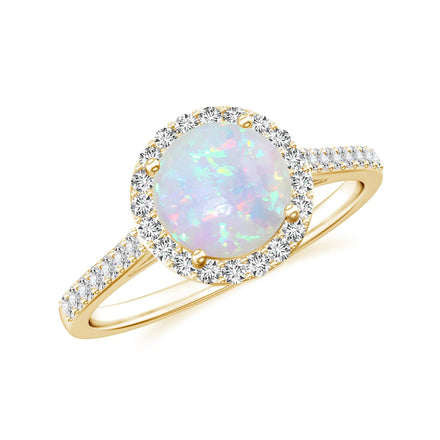
Round Opal Halo Engagement Ring with Moissanite Halo - 925 Sterling Silver
Discover timeless elegance with this exquisite round opal halo ring, a perfect blend of royal color and brilliant sparkle. The centerpiece features a stunning round-cut opal in a rich, vibrant multicolor hue that captures light beautifully from every angle. Crafted in lustrous sterling silver...- From $109.00
$140.00- From $109.00
- Unit price
- per
Save $31.00-
925 Sterling Silver
-
18K Yellow Gold Vermeil
-
18K Rose Gold Vermeil
-
18K White Gold Vermeil
-
Opal Teardrop V-Bale Pendant Necklace with Moissanite Diamond - 925 Sterling Silver
Grace your neckline with the timeless beauty of this Ethiopian Opal Teardrop V-Bale Pendant Necklace. Featuring a richly faceted pear-shaped natural amethyst gemstone secured in a delicate prong setting, the design is elevated by a sparkling moissanite diamond that adds refined brilliance. Crafted in...- From $75.00
$90.00- From $75.00
- Unit price
- per
Save $15.00-
925 Sterling Silver
-
18K Yellow Gold Vermeil
-
18K Rose Gold Vermeil
-
18K White Gold Vermeil
-
Prong-Set Pear Opal Halo Ring with Moissanite Diamond Halo - 925 Sterling Silver
Discover timeless elegance with this exquisite pear-shaped opal halo ring, a perfect blend of royal color and brilliant sparkle. The centerpiece features a stunning pear-cut opal in a rich, vibrant multicolor hue that captures light beautifully from every angle. Crafted in lustrous sterling silver...- From $109.00
$140.00- From $109.00
- Unit price
- per
Save $31.00-
925 Sterling Silver
-
18K Yellow Gold Vermeil
-
18K Rose Gold Vermeil
-
18K White Gold Vermeil


No gemstone performs quite like opal. Tilt it and green shifts to blue; turn it again and orange, pink, and violet ripple across the surface like light on water. This shifting rainbow - called play-of-color - exists in no other gem, which is why opal has fascinated humans for millennia. The opal gemstone jewelry collection at Topsy Jewels celebrates that magic with handcrafted rings, earrings, and necklaces set with natural opals, including luminous Ethiopian opals, in 925 sterling silver and 18K gold vermeil finishes.
An opal never shows you the same face twice, and that is precisely its charm: it is jewelry that stays interesting for a lifetime. Here is what to know about this one-of-a-kind gem before choosing yours.
The Science of the Rainbow
Opal is hardened silica containing a small amount of water, built from microscopic spheres stacked in orderly rows. When light enters the stone, those spheres diffract it - splitting white light into pure spectral colors that flash and move as the stone or the viewer moves. The size of the spheres determines which colors appear, which is why some opals favor cool blues and greens while the rarest flash red. Because every opal's internal structure is unique, no two opals on Earth are identical - your opal is literally yours alone.
Ethiopian Opal: The Bright New Star
For most of modern history, Australia defined opal. Then, in 2008, spectacular deposits were discovered in the Wollo (Welo) province of Ethiopia's highlands, and the gem world gained a new favorite. Ethiopian opals are famed for their crystal-clear to warm honey body tones and extraordinarily vivid play-of-color - electric greens, oranges, and reds that seem lit from inside. Many are hydrophane opals, meaning the stone can temporarily absorb water and change appearance until it dries out again - a quirk of nature worth knowing for care, and part of what makes these gems feel almost alive. The Ethiopian opals we set at Topsy Jewels are chosen for exactly that vivid, dancing fire.
October's Birthstone and Opal Lore
Opal is the birthstone for October, associated with the zodiac signs Libra and Scorpio, and the traditional gemstone of the 14th wedding anniversary. Its name traces back through Latin opalus to words for precious stone, and the ancients held it in remarkable esteem - Roman writers considered opal the most prized of gems because it carried the colors of all the others within it. Opal has long symbolized hope, creativity, and inspiration, a reputation that suits a stone that reinvents itself with every glance.
You may also have heard the old superstition that opal is unlucky for anyone not born in October. It is pure fiction - a rumor popularized by a nineteenth-century novel - and gem lovers have spent more than a century happily disproving it. Queen Victoria herself adored opals and gave them to her daughters as wedding gifts, doing more than anyone to restore the gem's sparkling reputation. Today opal is simply what it always was to the ancients: a stone of hope and good fortune, wearable by anyone lucky enough to own one. If anything, owning a gem no one else on Earth can duplicate feels like the very opposite of bad luck.
Choosing Your Opal Piece
Movement is what opal does best, which makes rings a natural showcase - every gesture sends new colors across the stone. Our opal rings include solitaires and moissanite diamond halo designs, with many styles offering a choice of gemstone sizes from 5x3 mm to 9x7 mm. A halo of white moissanite around an opal is particularly effective: the steady sparkle frames the shifting rainbow beautifully.
Our opal earrings flicker with color every time you turn your head, and the pendants in our opal necklaces collection are a gentler way to wear the gem, safely away from knocks. Metal-wise, yellow and rose gold vermeil warm the opal's honey tones and echo its orange flashes, while sterling silver and white gold vermeil give the rainbow a clean, modern stage.
Wearing Opal Every Day
Opal rewards a little styling intention:
- Keep surrounding colors simple - white, cream, denim, black - and let the opal supply the fireworks.
- Wear opal in daylight when you can; natural light wakes up play-of-color like nothing else.
- Pair opal with plain gold vermeil bands rather than other colored stones, which compete with its rainbow.
- For special occasions, an opal pendant with opal studs makes a coordinated set with built-in variety - no two stones ever match exactly, and that is the point.
An Opal from Topsy Jewels
Topsy Jewels handcrafts every opal design around a natural stone, hand-set in 925 sterling silver and offered in 18K yellow, rose, or white gold vermeil, with moissanite diamond accents where the design wants extra light. Because we build affordable fine jewelry, a genuine opal - a gem the Romans ranked above all others - is an accessible luxury for an October birthday, a 14th anniversary, Christmas, or the moment you decide you deserve a rainbow. If fiery orange is more her color than shifting spectrum, our fire opal jewelry collection is the sister page to this one, and the full gemstone jewelry collection holds every other stone we love.
Opal Care: Gentle Rules, Long Life
Opal measures 5.5 to 6.5 on the Mohs hardness scale and holds natural water in its structure, so it asks for mindful ownership. Remove opal rings before housework, exercise, and swimming; keep the stone away from prolonged heat, harsh chemicals, and sudden temperature swings. For hydrophane Ethiopian opals, avoid soaking - if the stone gets wet and turns temporarily translucent, simply let it dry naturally and its color will return. Clean opal only with a soft, barely damp cloth, never an ultrasonic machine, and store it in its own soft pouch away from harder gems. Small habits, lifelong rainbow.
Frequently Asked Questions
- Choosing a selection results in a full page refresh.